
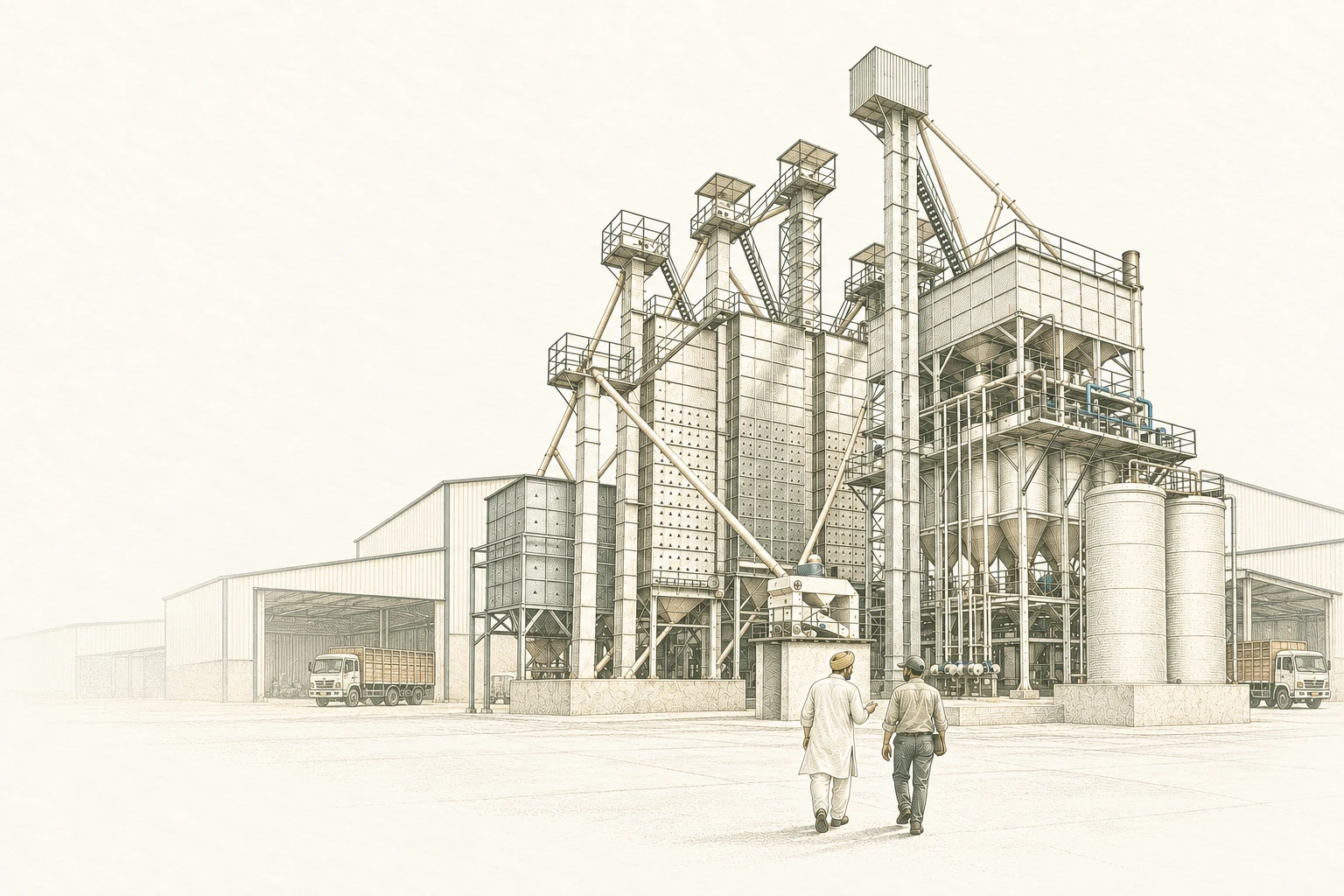
Our mill · Tarn Taran, Punjab
Care in the process.Character in the grain.
From paddy selection to the finished pack, the mill is at the heart of GGA International.
- Milling capacity
- 6 MT/hour
- Punjab, India
- Tarn Taran
- Processing · Grading · Packing
- Paddy to pack
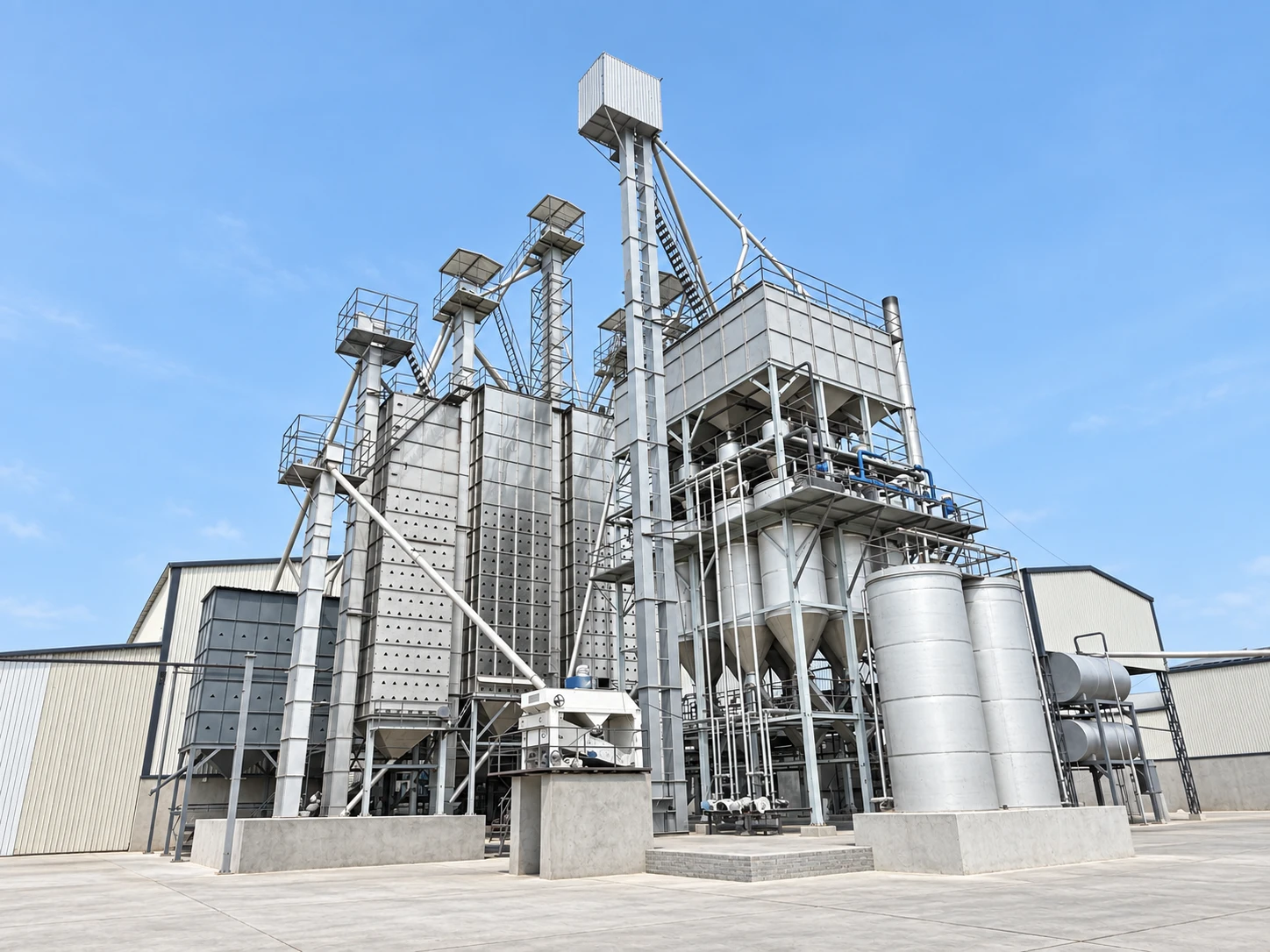
At the heart of our work
Built around
the grain.
Hands-on milling experience. A practical approach to every order.
Our mill operates at a confirmed milling throughput of 6 MT per hour. Paddy is sourced through commission agents at mandis across Punjab, Haryana and Uttar Pradesh.
Processing, grade and packaging are discussed against the product you need. We keep the conversation practical and the requirements clear.
25+ years of leadership experience
Inside the mill / Six stages
From paddy to rice.
Considered at every step.
Our approach to qualitySome process images are illustrative.
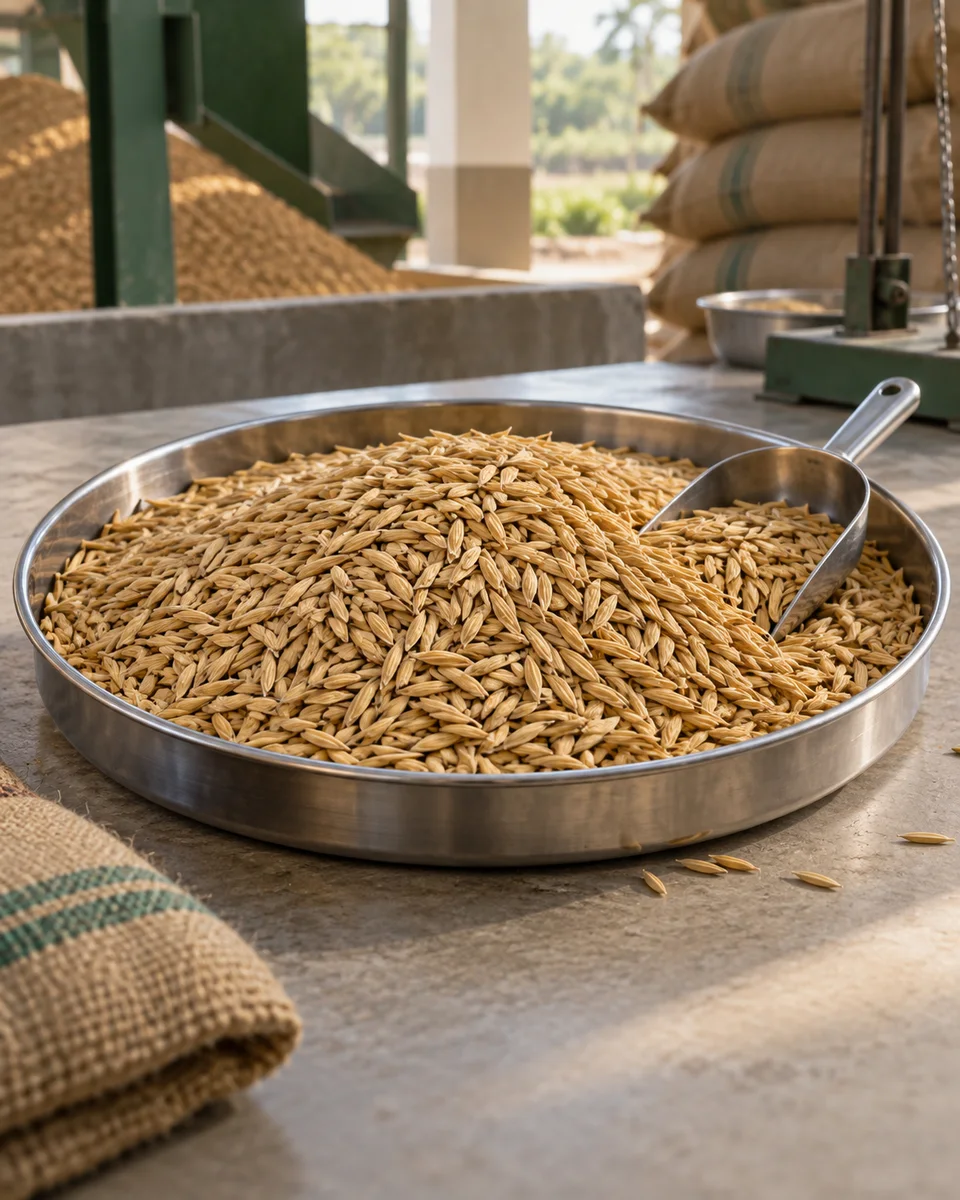
01 / Intake & grading
Paddy is sampled at intake. Moisture, appearance and the condition of the grain guide the first selection.
More about this stage
Every truck is sampled before it is tipped. Moisture, admixture, immature grain, foreign matter and the smell of the paddy are read at the gate, and a lot that misses the intake band is turned away rather than blended down. The lot number written here is the one that ends up on the container.
02 / Steam-maturation
Controlled steam treatment prepares the paddy before drying and milling. The process is selected for the rice being produced.
More about this stage
Maturation is the whole argument for premium Basmati, and we've built a faster, more consistent way to get there. Paddy is steamed under controlled conditions in our own boilers, then dried and rotated before its final milling pass — the texture, aroma and elongation buyers expect from a well-aged grain, achieved in a controlled process at our own mill rather than months in a warehouse. Paddy to finished rice: 15 to 18 hours, start to finish.
03 / Drying & storage
Drying and resting prepare the paddy for storage and the next processing stage, with care to preserve the grain.
More about this stage
Paddy arrives wet from the field and has to come down to a storage-safe moisture without shocking the grain. Dried too fast, the endosperm fissures and the grain breaks in the mill months later, long after anyone would think to blame the dryer. We step the moisture down in stages and rest the lot between passes.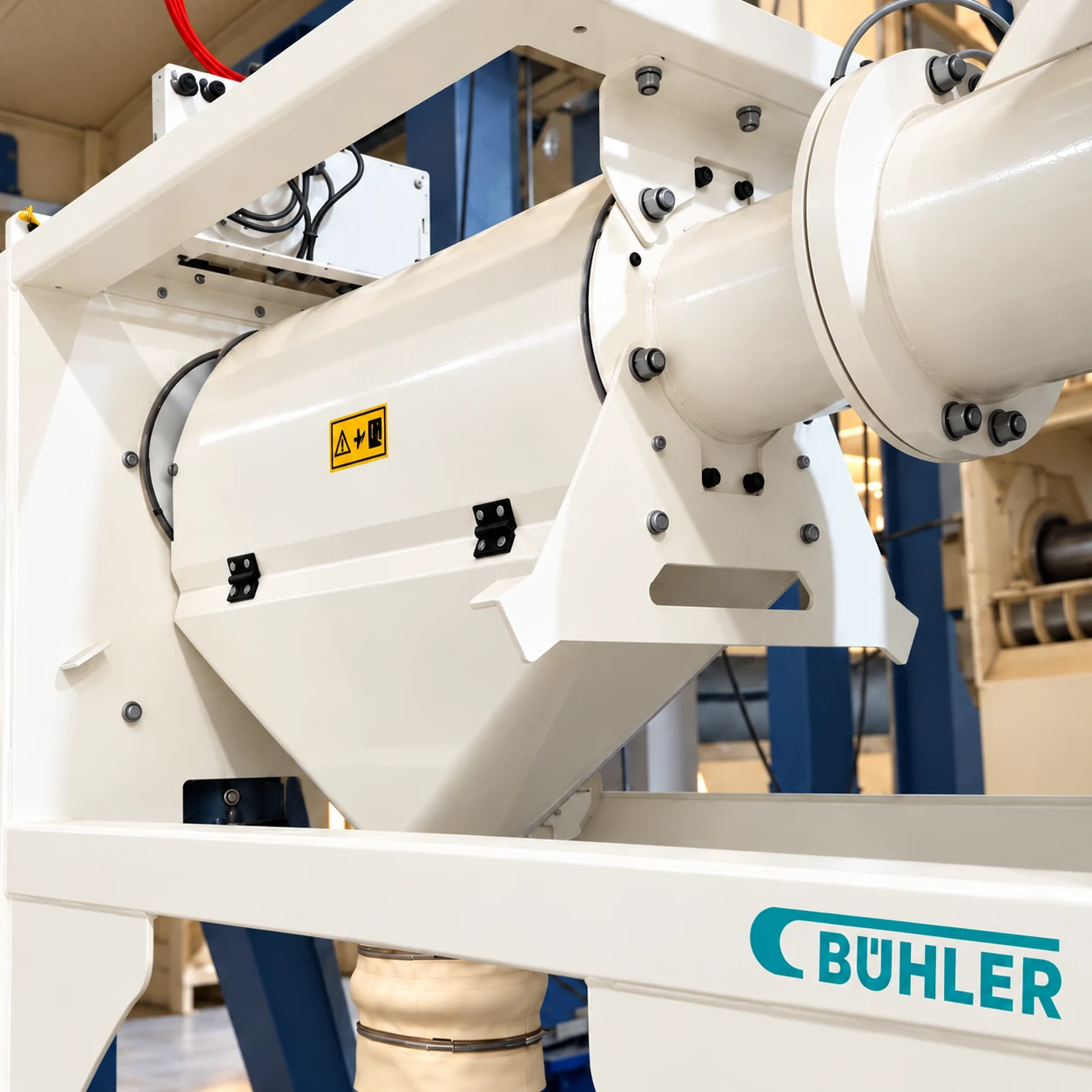
04 / Milling & polishing
Shelling removes the husk. Successive milling and polishing passes shape the finish while limiting grain breakage.
More about this stage
Rubber-roll shelling takes the husk off with minimal contact, then whitening and silky polishing are taken in gentle successive passes rather than one aggressive cut. Every pass is a chance to snap an 8.35 mm grain, and breakage is the one defect that cannot be sorted back out afterwards.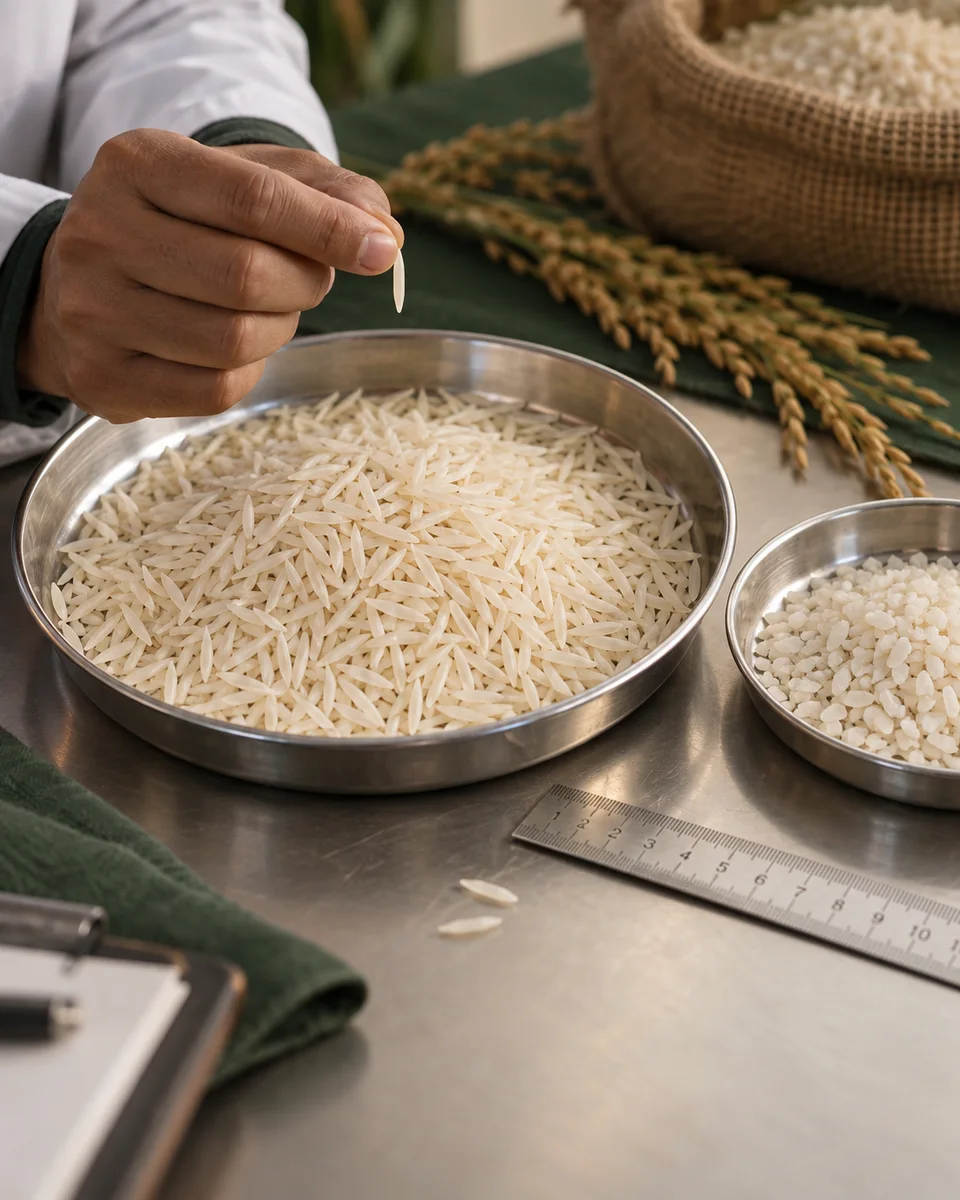
05 / Sortex & grading
Colour sorting and length grading separate grains by appearance and size before the accepted rice moves to packing.
More about this stage
Length graders separate whole grain from broken. Optical sorters read each grain against the lot standard and eject the discoloured, the chalky and the black-tipped. Rejects are re-run rather than written off, and the accepted stream is re-sampled before it reaches the packing line.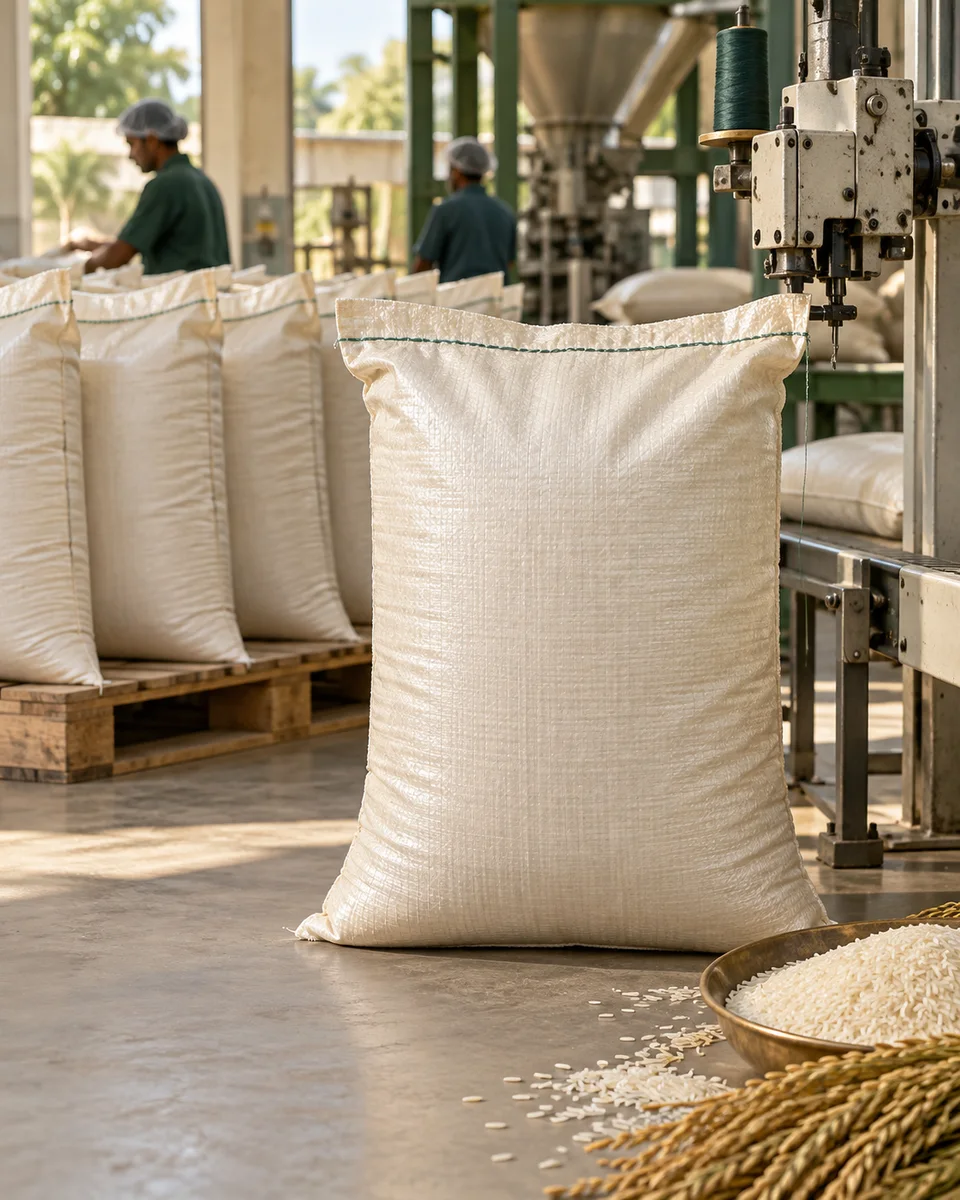
06 / Packing & stuffing
Rice is packed to the agreed format and artwork. Destination and handling requirements are reviewed for the order.
More about this stage
Packing runs against the buyer's approved artwork and destination labelling. Containers are checked for taint and damp, lined where the route calls for it, and sealed with the seal number recorded on the shipping documents.
Let’s talk about your requirements.
Ask about current processing capabilities and packing options.